
CNC milling machines and 3D printers for the orthopedic workshop
Corsets, sockets, AFOs and KAFOs, cranial helmets, insoles and seating: we design and build in Italy the machines you use to produce them digitally, without plaster.
- Some fortyworkshops produce with a Satres machine every day
- 1-2 daysof training to start producing
- Same dayreply when a machine stops
- 1 yearwarranty, extendable
What do you produce?
Start from the device: we'll tell you which machine fits.
 Corsets and body jackets
The polyurethane positive, with OCM or faster with ORTHO 1004 EVO. Or the corset printed directly with Helios HS.
OCM →
Corsets and body jackets
The polyurethane positive, with OCM or faster with ORTHO 1004 EVO. Or the corset printed directly with Helios HS.
OCM →
 AFOs, KAFOs, cranial helmets and lasts
With the fourth axis of ORTHO 1004 EVO: also leg-foot models, shoe lasts and insole positives.
ORTHO 1004 EVO →
AFOs, KAFOs, cranial helmets and lasts
With the fourth axis of ORTHO 1004 EVO: also leg-foot models, shoe lasts and insole positives.
ORTHO 1004 EVO →
 3D-printed sockets, insoles and seating
Helios HS directly prints corsets, sockets, insoles, cushions and custom seating.
Helios HS →
3D-printed sockets, insoles and seating
Helios HS directly prints corsets, sockets, insoles, cushions and custom seating.
Helios HS →
The machines

OCM
Compact 3-axis milling machine, 220 V: body jackets, and also sockets and insole positives. Discover →

ORTHO 1004 EVO
4-axis milling machine: faster corsets, AFOs and KAFOs, cranial helmets, leg-foot models, shoe lasts and insoles. Discover →

Helios HS
High-speed 3D printer: corsets, sockets, insoles, cushions and seating printed directly. Discover →
Made with our machines
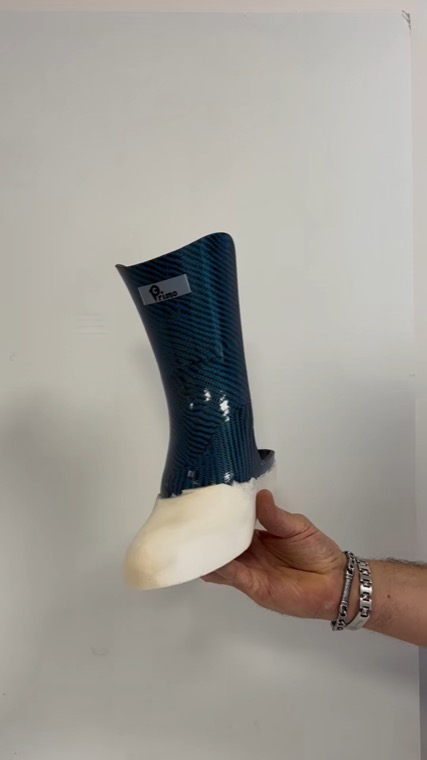
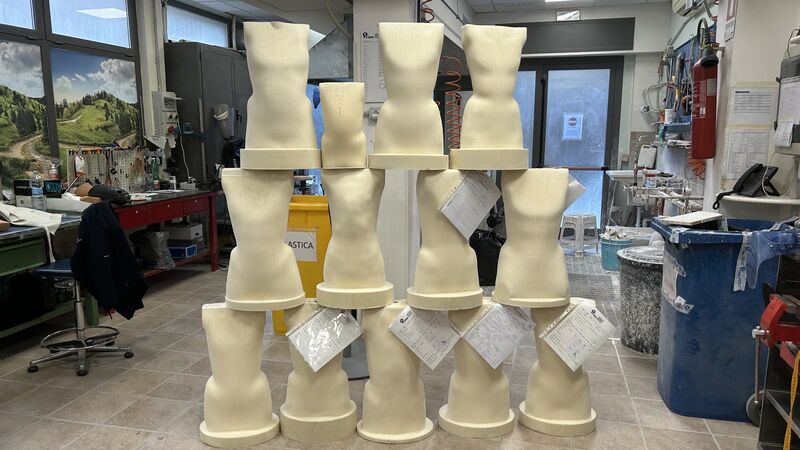
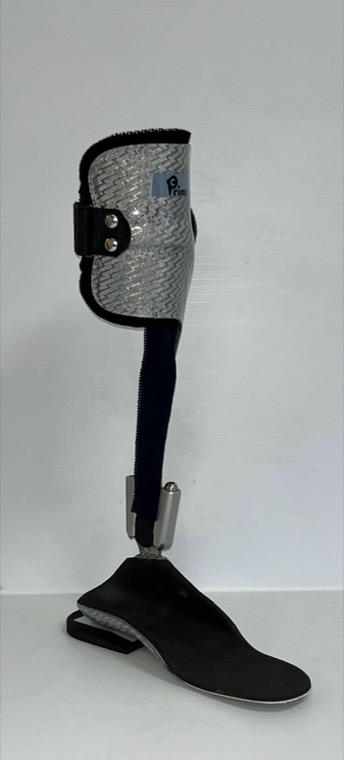
These are not product shots: they are real devices, made in labs that work with a Satres machine every day and photographed by the technicians who made them.

The hidden cost of plaster
In the traditional workflow the plaster positive is the bottleneck: you prepare it, wait for it to dry, shape it by hand, rectify it. Every piece depends on the hand that makes it, and no two pieces are truly identical.
The problem is not the quality of craftsmanship: it is that craftsmanship is not repeatable, not archivable and does not scale. When demand peaks, the only lever available is more hours.
How the workflow changes
- 1ScanningThe patient is captured in minutes, with no casts.
- 2CAD modellingRectification happens on screen: save it, reopen it, duplicate it for the next check-up.
- 3ProductionThe milling machine produces the polyurethane positive for thermoforming, or the 3D printer produces the device directly.
- 4Digital archiveThe file stays: the second device for the same patient does not start from scratch.
What you need to start
A CAD package with STL export (if you already have one, you carry on with it), space for the machine and a technician to train. Installation, set-up and training are included: the goal is that the lab produces from day one.
Frequently asked questions
Which machine is right for me?
It depends on what you produce. For body jackets, OCM; for AFOs, KAFOs, cranial helmets and lasts you need the fourth axis of ORTHO 1004 EVO; to print corsets, sockets and insoles directly there is Helios HS. The buying guide sets out the questions to ask. For 3D printing there is also a dedicated guide. For milling machines, read the guide to CNC machines for orthopedics.
How much space and what power supply?
OCM fits in about 80 × 120 cm, weighs 250 kg on wheels and runs on 220 V. ORTHO 1004 EVO runs on 380 V, or on 220 V as an option. Helios HS takes up 1300 × 950 mm of floor space.
Do I need CAD software?
Yes, to model the patient's shape: if you already have one that exports STL files, you carry on with it. We take you from the file to the machine during training.
How long is the training?
One or two days, included together with installation and set-up.
What if the machine stops?
When a Satres machine stops, we reply the same day. The warranty is one year, extendable.
Can I see it working before I buy?
Yes: in our demo area in Cascina, near Pisa, or remotely by video call. With Helios HS we can also print one of your files. Book a demo.
How much does it cost?
It depends on the machine and configuration. The calculator estimates in 3 minutes how much you save with your lab's numbers and, at the end, sends you the indicative price.

See it at work
In our demo area in Cascina, near Pisa, or remotely by video call: watch the machines at work and talk to the technicians who build them. For Helios HS we can also run a test print with your files.